


International Marine, Lighthouse Tourism & Maritime Heritage Conference
Dublin Castle 7th & 8th October 2025
The very earliest sailors navigated close to shore using their knowledge of coastal landmarks and natural phenomena.
"In 400 metres turn right…"
These days, when driving from A to B, we have our choice of help with navigation. From maps – usually via our phones – to the good old-fashioned method of asking for directions (depending on who’s driving!) and of course, Sat Nav.
From a maritime perspective, navigation is a much more structured and collaborative process which involves planning, recording and controlling the movement of vessels from one place to another. Lighthouse Authorities around the world are responsible for ensuring the Aids to Navigation (AtoN) infrastructure and services in their waters.
If you consider that trade by sea is growing and that approximately 95% of all logistics are carried out by sea, the need for rigorous and coordinated AtoN services can be better understood.

Maritime Navigation Begins
The very earliest sailors navigated close to shore using their knowledge of coastal landmarks and natural phenomena (birds, clouds, tides, floating debris) to guide them. The celestial bodies – the sun by day and the stars by night – also helped guide mariners, and still do today.
The first AtoN was developed, it is estimated, in 280BC when a lighthouse was built to mark the entry to the port of Alexandria in Egypt. This impressive lighthouse was even one of the seven wonders of the ancient world.
By Christopher Columbus’ era, ocean navigation was well underway. We were already navigating our way with magnetic compasses and types of quadrants. The first navigational charts had also appeared. The process of ‘dead reckoning’, where the position of a ship is established and subsequent positions are calculated based on a measured course and speed, was also in use. The speed of a vessel was calculated by throwing a log overboard on a rope with knots tied at known intervals and measuring how many knots played out over a set time interval. This is the origin of the present day term “knots”, which is used to describe the speed of a ship or a current in a body of water.
Later sextants and chronometers were invented and were used to accurately calculate a ship’s latitude and longitude based on observations of the sun and stars. Detailed navigational charts covering the known world also became available to guide mariners. The use of lighthouses was becoming more common, and the first floating AtoN to include a burning light was the Lightship Nore, established at the mouth of the River Thames in London in 1731.
National Authorities Established
Today with modern transatlantic air travel, it’s easy to forget that at that time – 200 years ago – all international commerce and communication was by sea. This explains the vital importance of these AtoNs in facilitating safe sea travel as it was so critical that national AtoN providers were established. The Commissioners of Irish Lights (then the Corporation for Preserving and Improving the Port of Dublin) was set up in 1786 as the National AtoN provider for the island of Ireland.
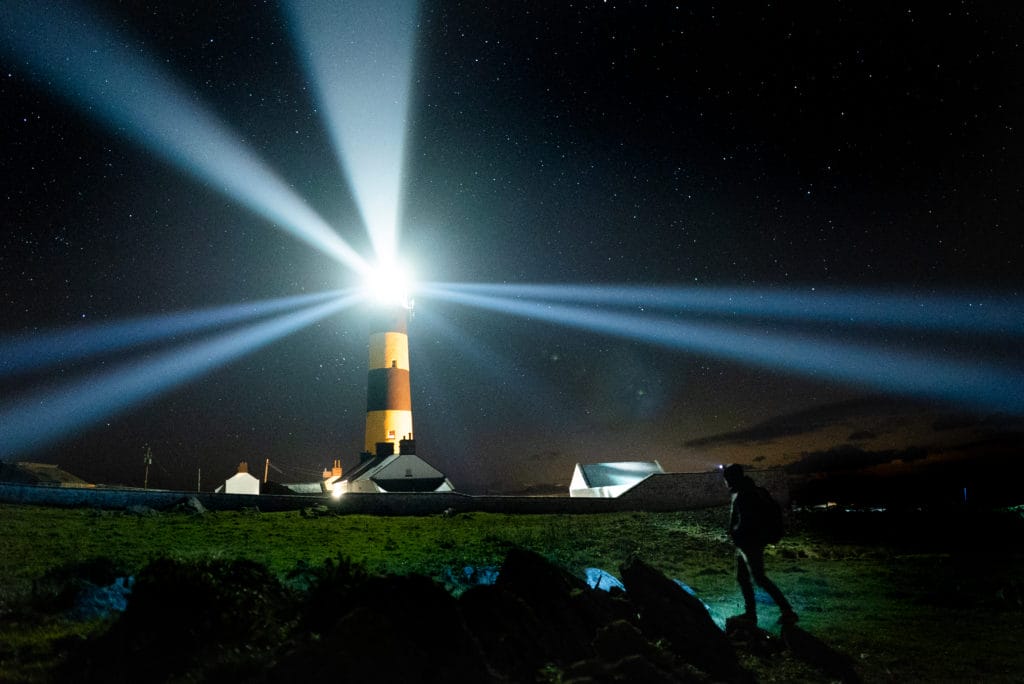
In the 1900s, radio technology was in its infancy, and the nature of AtoNs had not changed dramatically for many years. A visual system of lighthouse ‘daymarks’ (conspicuously painted with distinctive colours, like eye-catching Hook Head Lighthouse and St John’s Point) and lightships by day, and a system of uniquely-timed flashing lights by night, coupled with an audible system of fog signals, were provided for mariners at manned lighthouses and lightships. Though there are no longer lighthouse keepers at these stations, these aids are still provided, and are now sometimes known as traditional AtoNs.
Technological Advances
Over the course of the last century and to the present day, huge advances have been made in terms of terrestrial and extraterrestrial communication – particularly in the fields of radio and satellite navigation respectively. The more notable terrestrial-based systems have been radio beacons, Radio Detection and Ranging (Radar), Decca, and Loran. Of the extraterrestrial Global Navigational Satellite Systems (GNSS), GPS is the most well-known.
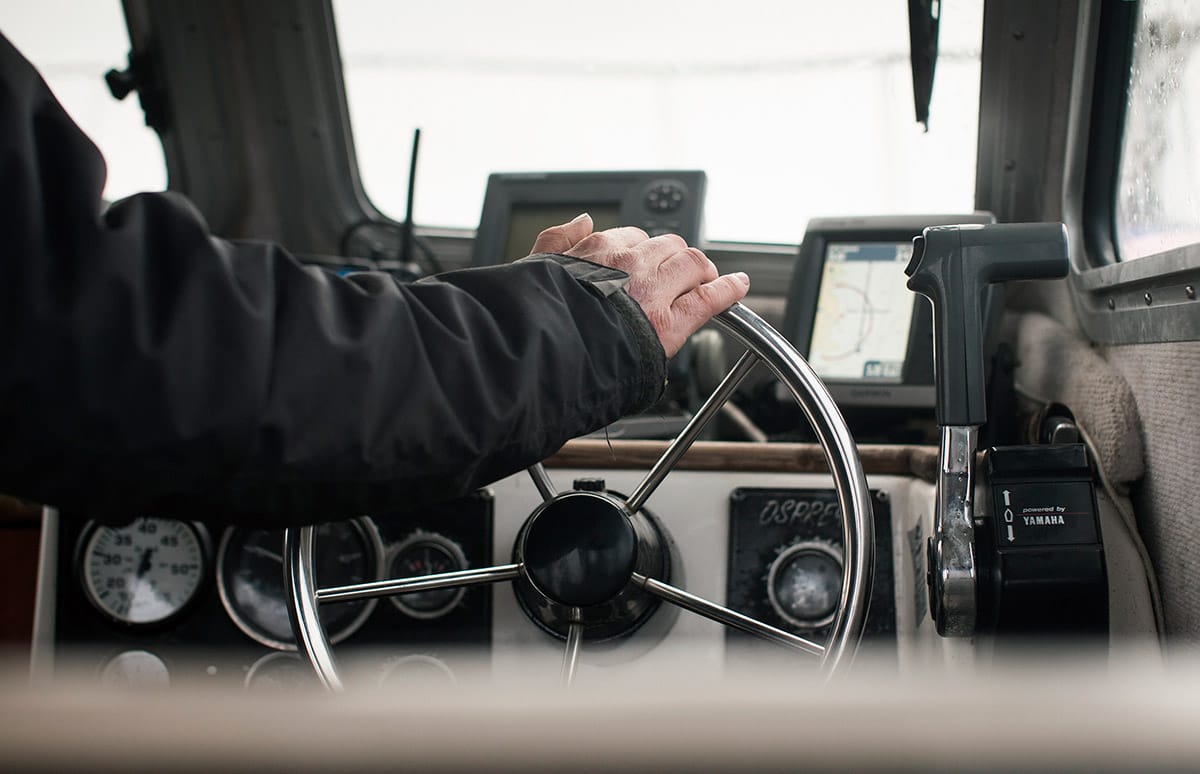
Today, ships have a wealth of systems with which to determine their position, course, and speed relative to hazards and other vessels. A large ship uses a combination of what is known as ‘Heads Up’ – when the ship is guided by a captain viewing the visual surroundings directly, and ‘Heads Down’ navigation, when a ship is guided by reference to an electronic sensor display.
Though new technologies have emerged, navigating by eye using visual AtoNs still plays a huge role in marine safety. Not all those who use our seas are equipped with satellite navigation systems and the latest technology. And, of course, one of the key principles in AtoN provision is that there must be alternatives available in the case of failure of any system. A mix of systems is critical to ensuring safe navigation.
A ship equipped with modern electronic navigation systems, good visual information on her surroundings and an alert and responsible captain, is as good as you’ll get in navigational terms, and ensures optimum safety at sea.
International Marine, Lighthouse Tourism & Maritime Heritage Conference
Dublin Castle 7th & 8th October 2025
| Cookie | Duration | Description |
|---|---|---|
| cookielawinfo-checkbox-advertisement | 1 year | Set by the GDPR Cookie Consent plugin, this cookie is used to record the user consent for the cookies in the "Advertisement" category . |
| cookielawinfo-checkbox-analytics | 11 months | This cookie is set by GDPR Cookie Consent plugin. The cookie is used to store the user consent for the cookies in the category "Analytics". |
| cookielawinfo-checkbox-functional | 11 months | The cookie is set by GDPR cookie consent to record the user consent for the cookies in the category "Functional". |
| cookielawinfo-checkbox-necessary | 11 months | This cookie is set by GDPR Cookie Consent plugin. The cookies is used to store the user consent for the cookies in the category "Necessary". |
| cookielawinfo-checkbox-others | 11 months | This cookie is set by GDPR Cookie Consent plugin. The cookie is used to store the user consent for the cookies in the category "Other. |
| cookielawinfo-checkbox-performance | 11 months | This cookie is set by GDPR Cookie Consent plugin. The cookie is used to store the user consent for the cookies in the category "Performance". |
| elementor | never | This cookie is used by the website's WordPress theme. It allows the website owner to implement or change the website's content in real-time. |
| viewed_cookie_policy | 11 months | The cookie is set by the GDPR Cookie Consent plugin and is used to store whether or not user has consented to the use of cookies. It does not store any personal data. |
| Cookie | Duration | Description |
|---|---|---|
| bcookie | 1 year | LinkedIn sets this cookie from LinkedIn share buttons and ad tags to recognize browser ID. |
| bscookie | 1 year | LinkedIn sets this cookie to store performed actions on the website. |
| li_gc | 5 months 27 days | Linkedin set this cookie for storing visitor's consent regarding using cookies for non-essential purposes. |
| lidc | 1 day | LinkedIn sets the lidc cookie to facilitate data center selection. |
| UserMatchHistory | 1 month | LinkedIn sets this cookie for LinkedIn Ads ID syncing. |
| Cookie | Duration | Description |
|---|---|---|
| _uetsid | never | Bing Ads sets this cookie to engage with a user that has previously visited the website. |
| _uetvid | never | Bing Ads sets this cookie to engage with a user that has previously visited the website. |
| Cookie | Duration | Description |
|---|---|---|
| _ga | 2 years | The _ga cookie, installed by Google Analytics, calculates visitor, session and campaign data and also keeps track of site usage for the site's analytics report. The cookie stores information anonymously and assigns a randomly generated number to recognize unique visitors. |
| _gat_gtag_UA_27868640_1 | 2 hours | Set by Google to distinguish users. |
| _gat_gtag_UA_63181459_1 | 1 minute | Set by Google to distinguish users. |
| _gid | 1 day | Installed by Google Analytics, _gid cookie stores information on how visitors use a website, while also creating an analytics report of the website's performance. Some of the data that are collected include the number of visitors, their source, and the pages they visit anonymously. |
| AnalyticsSyncHistory | 1 month | Linkedin set this cookie to store information about the time a sync took place with the lms_analytics cookie. |
| CONSENT | 2 years | YouTube sets this cookie via embedded youtube-videos and registers anonymous statistical data. |
| iutk | 5 months 27 days | This cookie is used by Issuu analytic system to gather information regarding visitor activity on Issuu products. |
| Cookie | Duration | Description |
|---|---|---|
| IDE | 1 year 24 days | Google DoubleClick IDE cookies are used to store information about how the user uses the website to present them with relevant ads and according to the user profile. |
| MUID | 1 year 24 days | Bing sets this cookie to recognize unique web browsers visiting Microsoft sites. This cookie is used for advertising, site analytics, and other operations. |
| test_cookie | 14 minutes | The test_cookie is set by doubleclick.net and is used to determine if the user's browser supports cookies. |
| VISITOR_INFO1_LIVE | 5 months 27 days | A cookie set by YouTube to measure bandwidth that determines whether the user gets the new or old player interface. |
| YSC | session | YSC cookie is set by Youtube and is used to track the views of embedded videos on Youtube pages. |
| yt-remote-connected-devices | never | YouTube sets this cookie to store the video preferences of the user using embedded YouTube video. |
| yt-remote-device-id | never | YouTube sets this cookie to store the video preferences of the user using embedded YouTube video. |
| Cookie | Duration | Description |
|---|---|---|
| DEVICE_INFO | 5 months 27 days | No description |
| ypsession | 1 month | No description available. |
| ypsitetrack | 1 year | No description |
| yumpu_slc | 7 days | No description available. |